
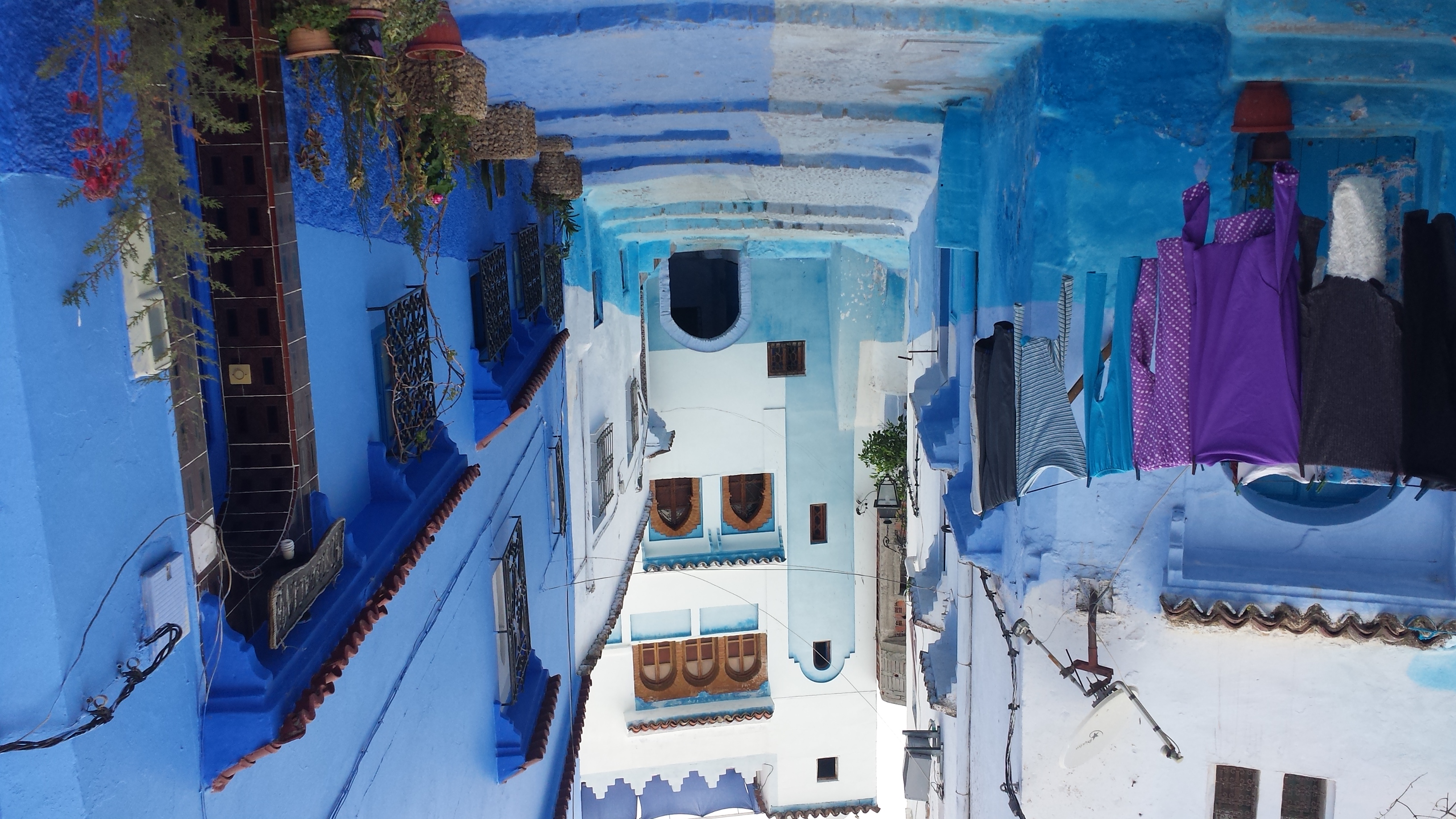
Chefchaouen is Morocco's blue city that does not feel real at first. You arrive expecting a photogenic mountain town, and then the streets start folding around you in shades of cobalt, powder blue, indigo, and white. Doorways look painted for a dream. Cats sleep in the sun. Mint tea appears at the exact moment your legs need a pause. The Rif Mountains sit behind it all like a quiet wall, reminding you that this is not only a photo stop. It is a place with rhythm, history, texture, and a slower kind of travel magic.
This guide is for travelers who want Chefchaouen to feel smooth from the first airport moment: how to arrive, where the blue streets are, what to pack, how to stay connected with an eSIM, and how to enjoy the city without turning the whole trip into a rushed photoshoot.
Why Chefchaouen Belongs on a Morocco Itinerary
Chefchaouen is tucked into northern Morocco, in the Rif Mountains, and it has become famous for its blue-painted medina. But the real charm is not only the color. It is the combination of mountain air, relaxed pace, artisan shops, small cafes, tiled courtyards, narrow stairs, and the feeling that every turn might lead to a prettier street than the last.
Unlike Marrakech or Fez, Chefchaouen feels gentler for many first-time visitors. The medina is still atmospheric, but the scale is easier to understand. You can wander, stop for orange juice, buy woven textiles, climb toward a viewpoint, and return to the main square without feeling swallowed by the city. That makes it ideal for couples, solo travelers, photographers, digital nomads, and anyone who wants a softer Moroccan stop between bigger cities.
The Best Way to Get to Chefchaouen
Chefchaouen does not have a major international airport, so most travelers arrive by road after landing elsewhere in Morocco. The most practical gateways are usually Tangier, Tetouan, or Fez.
- Tangier: Often the easiest airport choice for Chefchaouen. From Tangier, you can continue by bus, private transfer, or shared taxi.
- Tetouan: A closer northern option, useful if your route already includes the Mediterranean coast.
- Fez: A strong choice if you are building a classic Morocco itinerary and want to combine imperial-city energy with the calm of the Blue City.
If your flight lands late, do not improvise the final road transfer at night. Book a private transfer in advance or sleep near your arrival city and continue the next morning. Morocco is much easier when you protect your first travel day from exhaustion.
First Arrival: What to Do Before You Start Wandering
When you reach Chefchaouen, resist the temptation to drag your luggage straight into the steepest lanes. The old town has stairs, uneven stones, and narrow passages where rolling suitcases become a punishment. If your accommodation is inside the medina, message them before arrival and ask for the easiest drop-off point. Many riads and guesthouses can explain exactly where a taxi should leave you.
Once you check in, take 20 minutes to set up the basics: save your accommodation on offline maps, check your mobile data, put small cash in an easy pocket, and leave unnecessary weight in the room. Chefchaouen rewards light wandering.

Why an eSIM Makes Chefchaouen Easier
A travel eSIM is one of the simplest upgrades you can make before visiting Morocco. Chefchaouen is easy to enjoy, but the logistics around it depend on maps, hotel messages, transfer confirmations, bus information, translation, and quick searches. Having mobile data from the airport helps you avoid that awkward first-hour scramble for Wi-Fi.
Before departure, check that your phone supports eSIM, compare Morocco data plans, install the eSIM profile while you still have stable Wi-Fi, and save the activation instructions offline. In most cases, you should activate the plan when you land, unless your provider gives different instructions.
For travel connectivity tips and destination-friendly mobile internet planning, you can also visit eSIMBLACK before your trip.
What to See in the Blue City
The main attraction is the medina itself. Chefchaouen is not a city where you need a complicated checklist. The best moments often happen between destinations: a blue staircase with flowerpots, a painted archway, a cat guarding a doorway, a shopkeeper arranging leather slippers, or the mountain light changing the color of a wall.
- The blue medina streets: Go early in the morning for softer light and fewer people.
- Plaza Uta el-Hammam: The central square for cafes, people-watching, and easy orientation.
- The Kasbah area: A historic anchor in the old town and a useful landmark while exploring.
- Spanish Mosque viewpoint: A classic sunset walk for views over the blue city and the mountains.
- Local artisan shops: Look for woven blankets, wool garments, leather goods, ceramics, and small handmade pieces.
The Photography Rule That Makes the Trip Better
Chefchaouen is incredibly photogenic, but it is also a living city. The best approach is simple: photograph streets and architecture freely, but be careful around people, private homes, children, shops, and doorways. Ask before taking close photos of residents or vendors. If a corner is clearly part of someone's home, treat it with respect even if it looks perfect for Instagram.
For better photos, go early, wear neutral colors that do not fight the blue, and step aside when locals need to pass. You will get better images and a better feeling from the trip.
What to Pack for Chefchaouen
Chefchaouen is a walking destination, so comfort matters more than fashion. The streets are beautiful, but they are not always smooth. Pack like someone who wants to enjoy the city all day without returning to the room every hour.

- Comfortable walking shoes with grip.
- A light jacket for cooler mountain evenings.
- A small day bag for water, cash, documents, and camera gear.
- A power bank for long photo walks.
- Modest, breathable clothing that works for warm days and cooler nights.
- Sunglasses, sunscreen, and a reusable water bottle.
- Offline copies of hotel details, transfer bookings, passport scan, and eSIM instructions.
Airport and Luggage Tips
If Chefchaouen is part of a longer Morocco route, avoid overpacking. A compact suitcase or backpack is much easier than a heavy roller on medina stones. Keep one small bag accessible with your passport, phone, charger, local cash, and arrival address.
At the airport, activate your mobile data, confirm your transfer or bus plan, and message your accommodation with your estimated arrival time. If you are taking a bus, arrive early enough to buy or confirm your ticket without rushing. If you are using a private transfer, agree on the pickup details before you fly.
How Many Days Do You Need?
One night is possible, but two nights feel much better. With two nights, you can arrive without panic, explore the medina in soft morning light, enjoy sunset from a viewpoint, and still have time for slow meals and shopping. If you love photography, mountain walks, or unhurried travel, three nights can feel surprisingly easy.
Best Time to Visit Chefchaouen
Spring and autumn are often the most comfortable seasons because the weather is usually easier for walking. Summer can still be enjoyable, especially compared with hotter Moroccan cities, but it may bring more visitors. Winter is quieter and atmospheric, though evenings can feel cold in the mountains.
No matter when you go, plan your main wandering early or late in the day. Midday is better for lunch, tea, shopping, or resting at your riad.
Food, Tea, and Small Moments
Do not treat Chefchaouen only as a backdrop. Sit down for mint tea. Try a tagine. Order fresh bread and olives. Watch the square fill and empty. Some of the best memories come from doing less: a rooftop breakfast, a slow conversation with a shopkeeper, a quiet lane after sunset, a mountain breeze after a long climb.
This is the kind of place where the itinerary should leave room for accidents. If a street looks beautiful, follow it. If a cafe has a terrace with a view, pause. If the light is perfect, stay a little longer.
Final Travel Checklist
- Choose Tangier, Tetouan, or Fez as your practical arrival gateway.
- Book onward transport before arrival if landing late.
- Install your Morocco eSIM before flying and save instructions offline.
- Pack light because medina streets include slopes, stairs, and uneven stones.
- Bring comfortable shoes, a jacket, a power bank, and a small day bag.
- Respect private homes and ask before photographing people.
- Stay at least two nights if you want a relaxed Blue City experience.
Conclusion: Chefchaouen Is Better When You Travel Light
Chefchaouen is not just Morocco's famous blue city. It is a mountain pause, a camera roll full of color, a gentle break between bigger Moroccan routes, and a reminder that the best travel days are not always the busiest ones. If you arrive connected, pack light, respect the rhythm of the medina, and give yourself enough time to wander, Chefchaouen becomes more than a beautiful stop. It becomes one of those places your memory keeps repainting in blue.
Images: Wikimedia Commons. Travel connectivity mention: eSIMBLACK.


0 Comments